Timeline
2026
Role
Team
Solo project
Tools
Figma · Miro · Notion
01The Brief
How might we...
How might we create a platform where academics can build meaningful academic relationships with confidence?
02Context
The problem we are solving
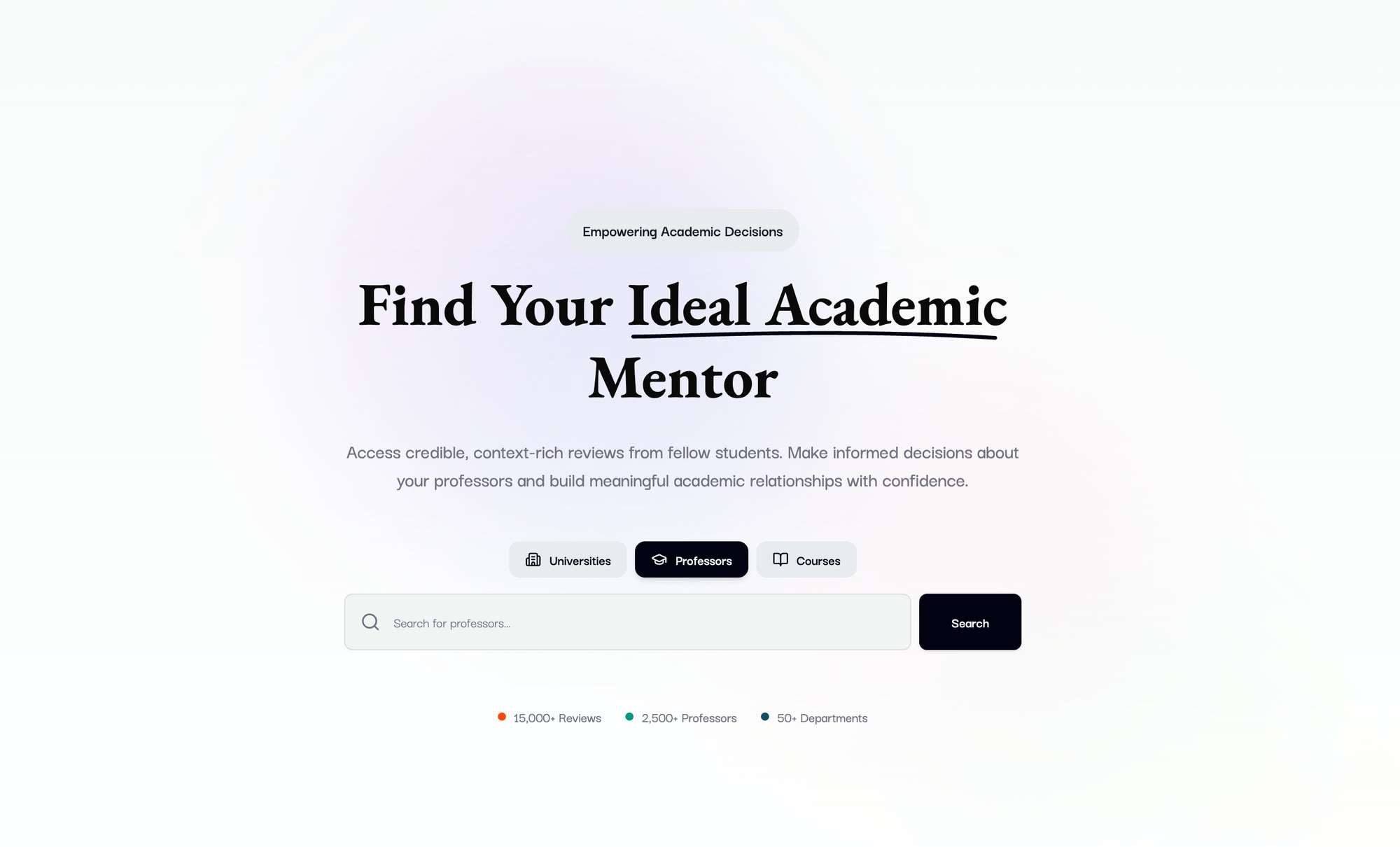
Academic mentorship runs on personal networks - leaving most researchers to navigate it alone. There's no central system that's easy to use, confidence-building, and transparent. This project set out to change that: a structured, trustworthy platform for high-stakes academic decisions.
03Insights Discovered
Risk, not indifference
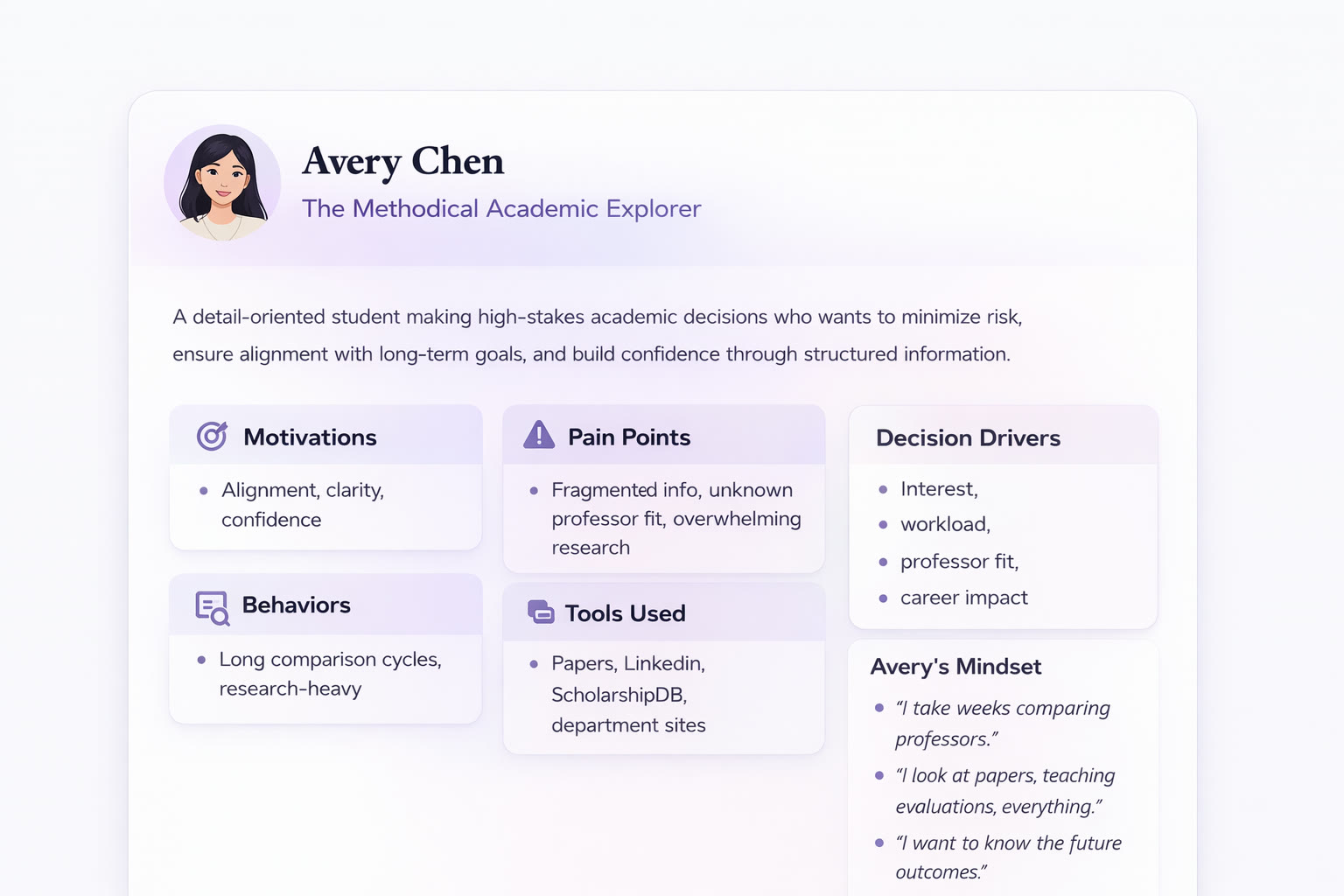
User interviews revealed a core tension: academics wanted guidance but found cold outreach professionally risky. Existing tools were either too informal or too institutional. We formated the persona Avery Chen - a PostDoc navigating her first year - gave structure to the challenge and kept every design decision grounded.
04Process
Build, test, sharpen
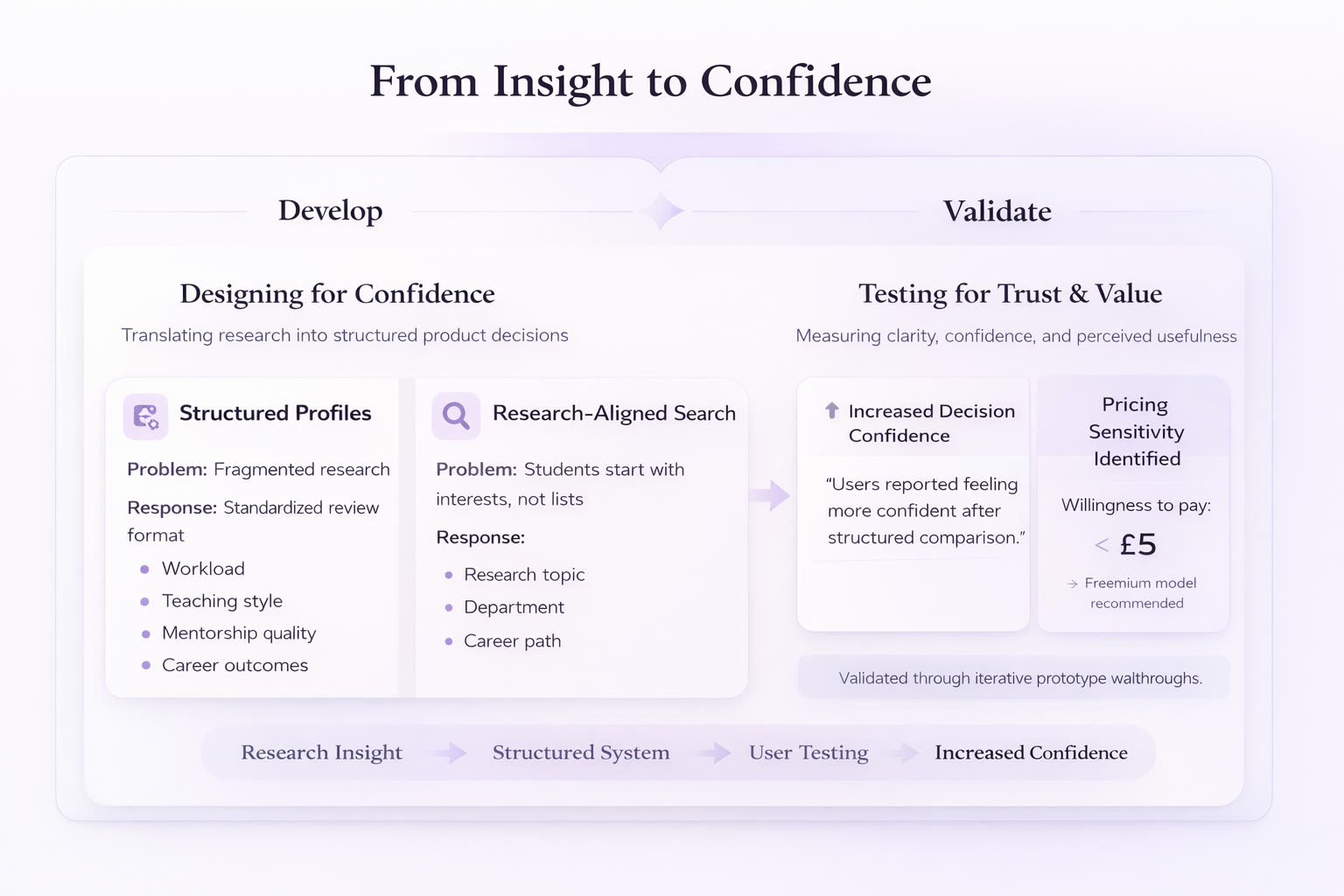
A structured feature audit across existing academic networking tools identified the confidence and transparency gaps that shaped every design decision. Three prototype rounds with 25+ academics refined the trust model, profile depth, and matching logic.
Mapping the landscape
A competitive audit of LinkedIn, ResearchGate, and institutional portals revealed common drop-off points and the specific trust signals users needed but couldn't find.
Co-designing the profile model
Workshops with postdocs and senior academics aligned the mentor profile structure, relationship stages, and the language around asking for help without social cost.
Testing trust signals
Three rounds of prototype testing refined verification indicators, review display, and connection initiation flow until users felt consistently confident.
05Solution
Trust, structured
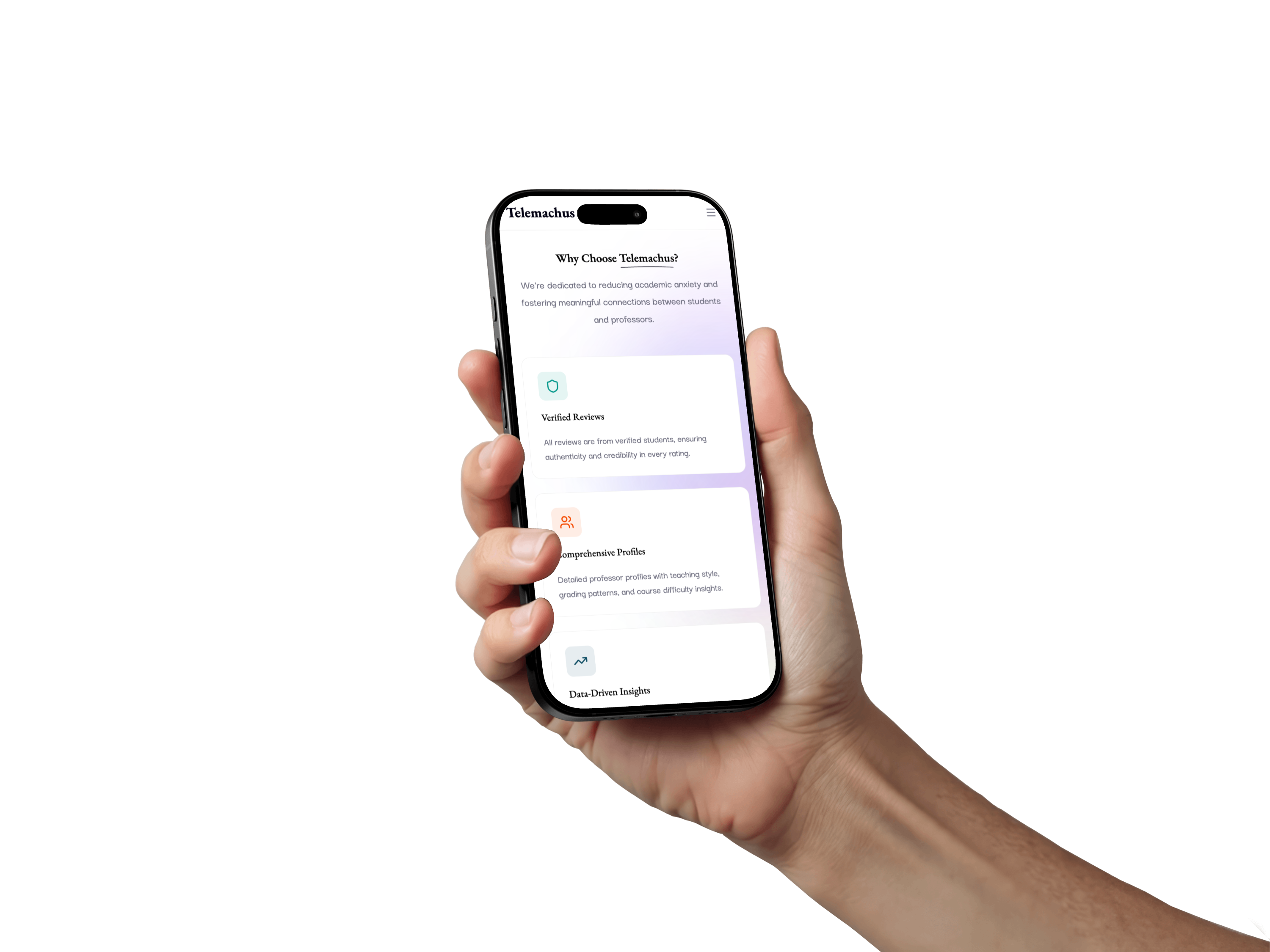
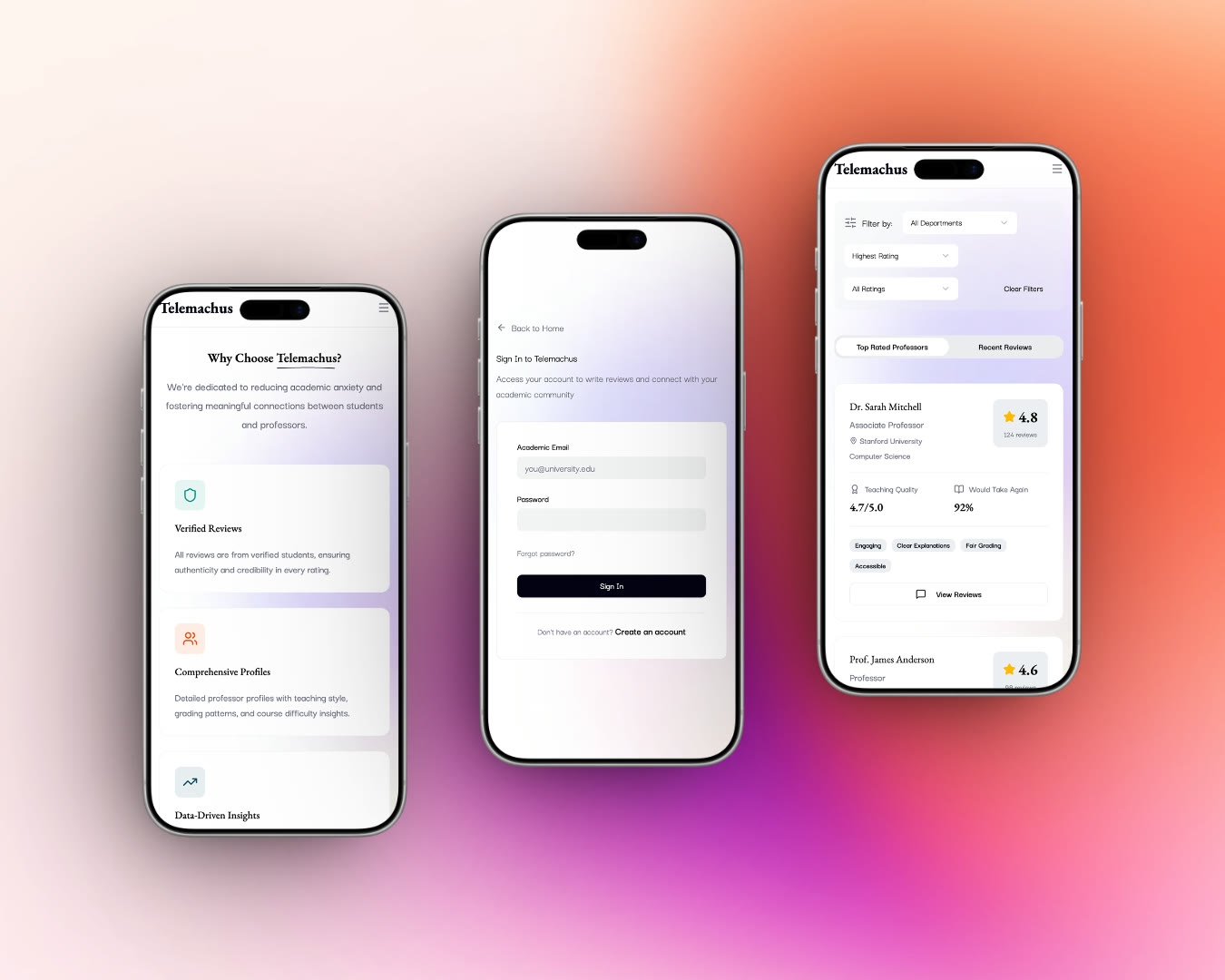
A structured academic mentorship platform that removes social risk from the process of finding and reaching out to mentors - built around clear trust signals and guided relationship stages.
Verified Academic Profiles
Institution-linked profiles with peer endorsements and research history give users clear confidence signals before they initiate contact.
Guided Connection Flow
A step-by-step process for reaching out - with templated first messages and mentor availability indicators - reduces the social friction of cold contact.
Transparent Relationship Stages
Clearly defined progression from first contact through active mentoring gives both parties structure and shared expectations throughout the relationship.
06Outcome
Validated across every trust metric
Across all three testing rounds, trust and transparency emerged as the primary success metrics - and both were met. The platform achieved a 100% trust rating and an 87.3 SUS score across 25+ academic participants.
100%
of users (15) who were shown the initial prototyped designs felt they could trust the platform
87.3
perceived usability score when tested with 25+ academic participants