Timeline
2023
Role
Team
Solo project
Tools
Figma · Webflow · Miro · VSCode
01The Brief
How might we...
How might we encourage GPs to take more frequent breaks - reducing stress and improving wellbeing - without disrupting their workflow or time with patients?
02Context
The burnout crisis in primary care
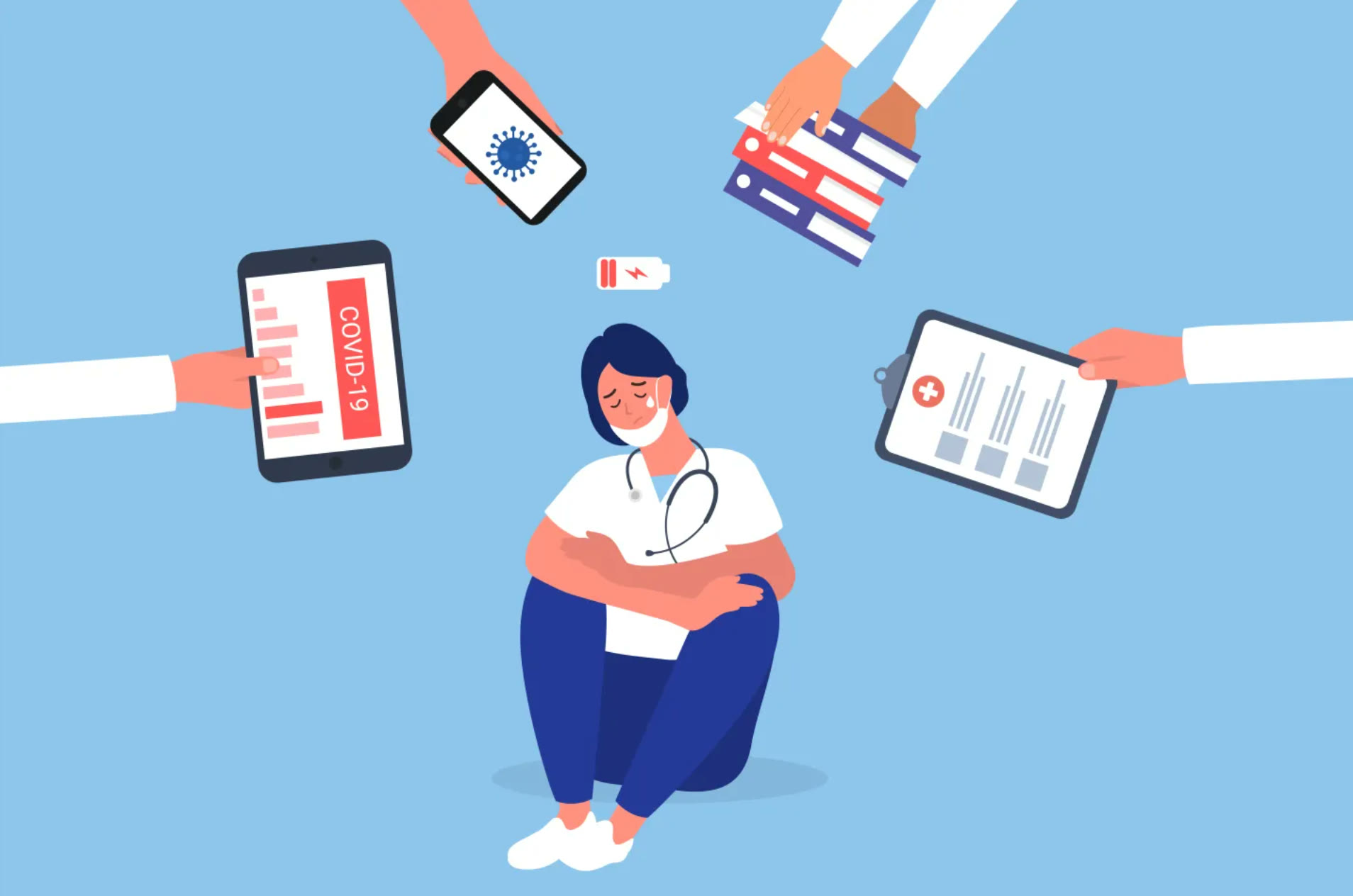
GP burnout was already critical before the pandemic - but COVID pushed it over the edge. Workloads rose by 20%, consultation time shrank, and self-care became an afterthought. The challenge was designing something that could reduce stress without touching the workflow GPs depend on.
03Insights Discovered
The gap between intention and action
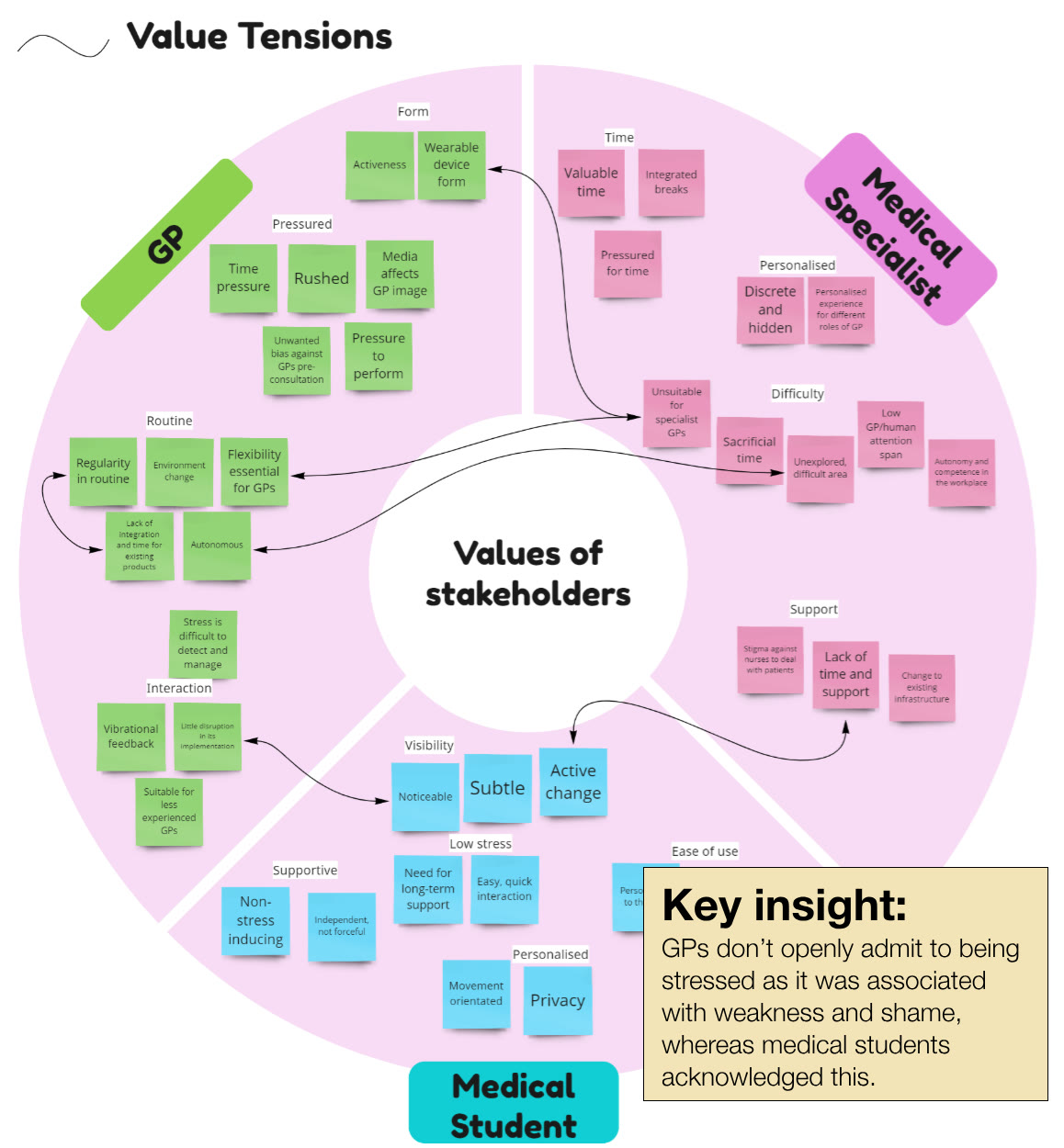
Fifteen interviews with GPs surfaced a simple truth: they weren't against taking breaks - they just had nothing prompting them to. Traditional reminders felt intrusive mid-session, but the transition between patients was already there. That seam became the foundation for everything.
04Process
From evidence to intervention
SDT, nudge theory, and JITAI principles shaped the design - encouraging behaviour change without mandating it. The intervention was co-designed over two sessions with GPs, then prototyped in practice and validated with 25+ medical professionals.
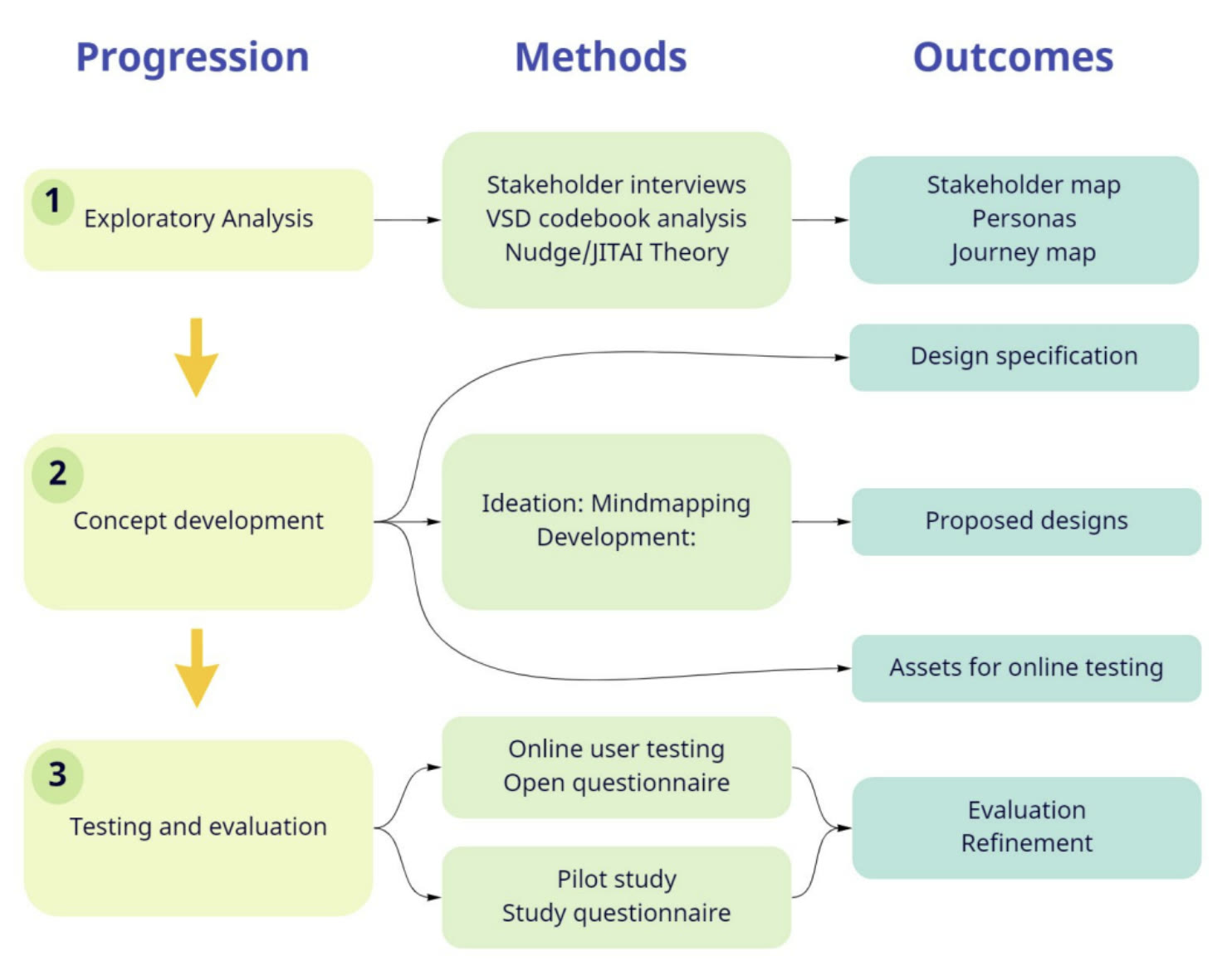
Speaking with medical professionals
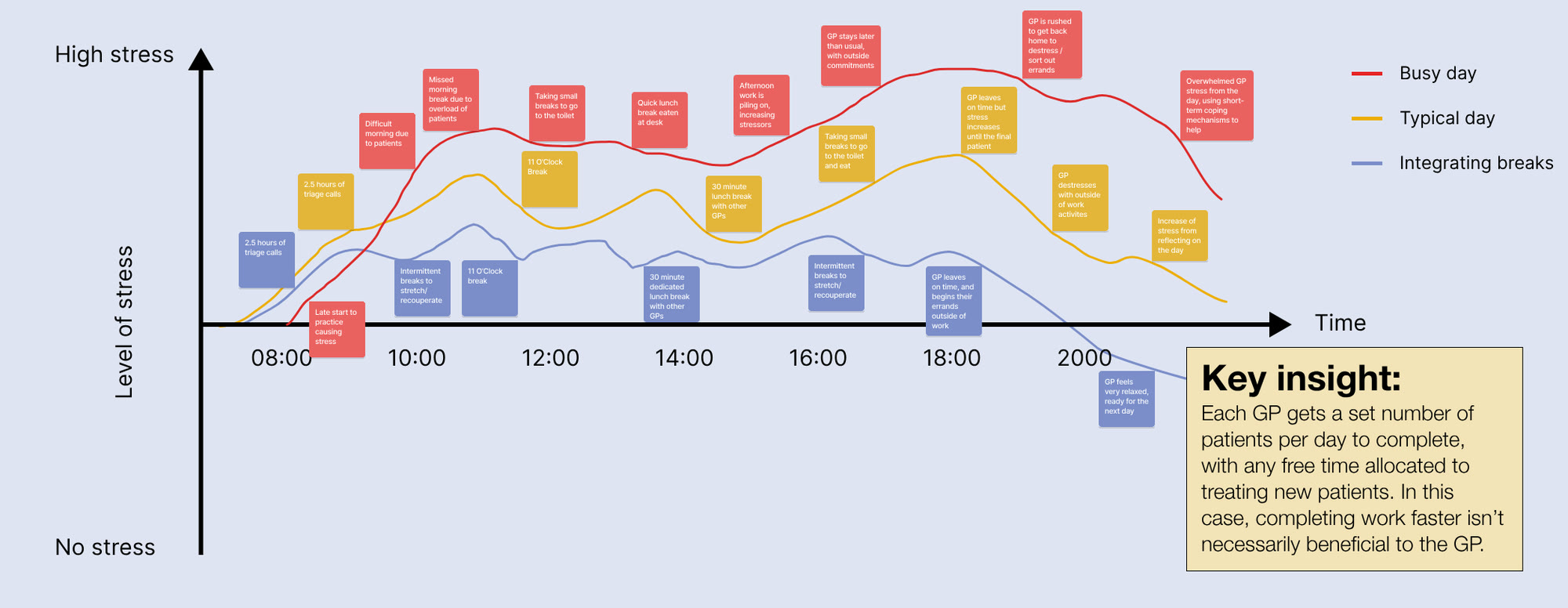
15 interviews mapped how GPs actually experience stress across their day. Insights were synthesised into themes and user stories that directly shaped the interaction model.
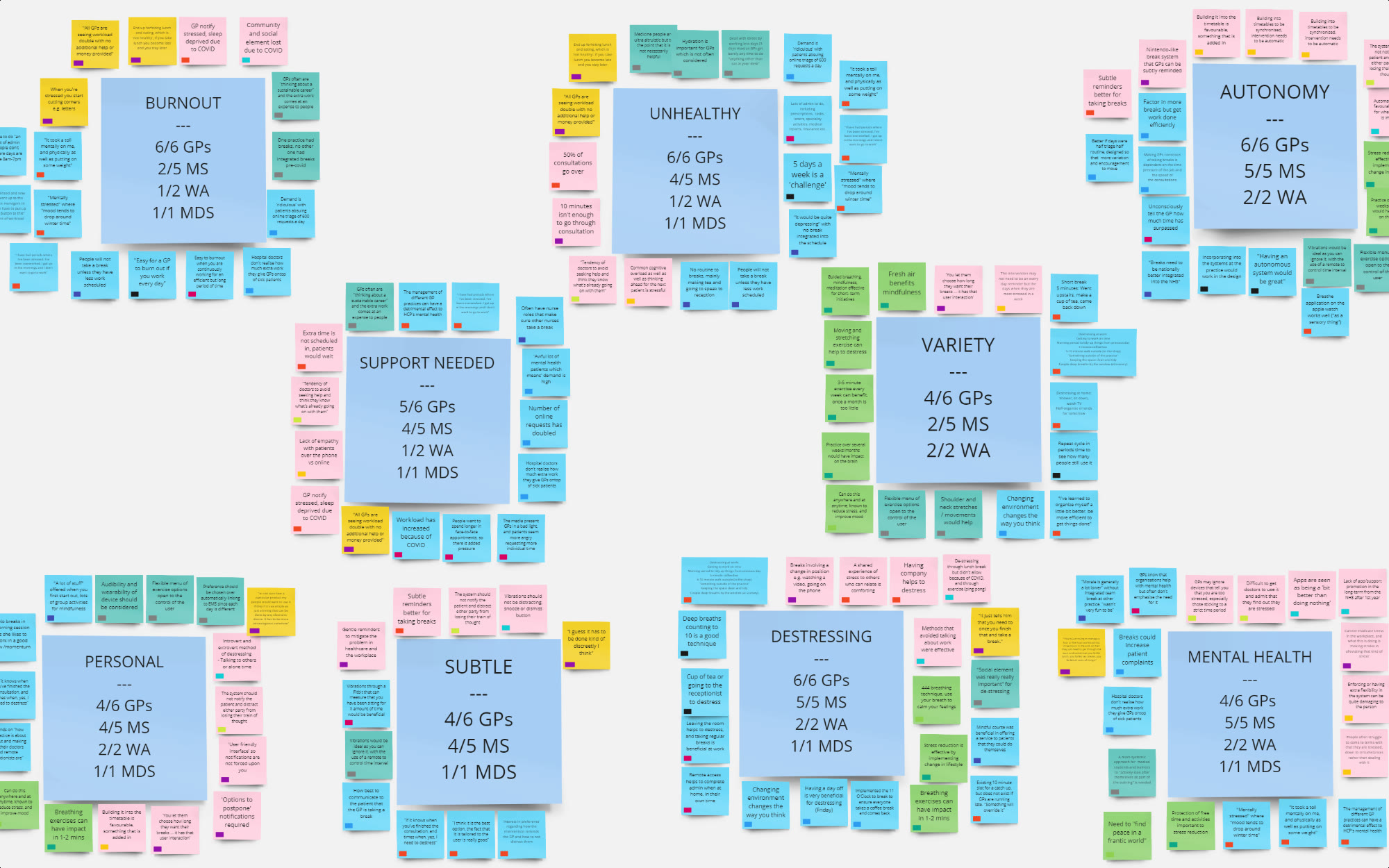
Co-designing the intervention
Behavioural theory was embedded across two co-design workshops with GPs. The output was validated by the university team and clinical advisors.
Testing effectiveness and adoption
A live prototype ran with 3 GPs across a full working week. A concept video shared with 25+ professionals yielded SUS scores and direct feedback on usability and impact.
05Solution
Nudging wellbeing at the seam of care
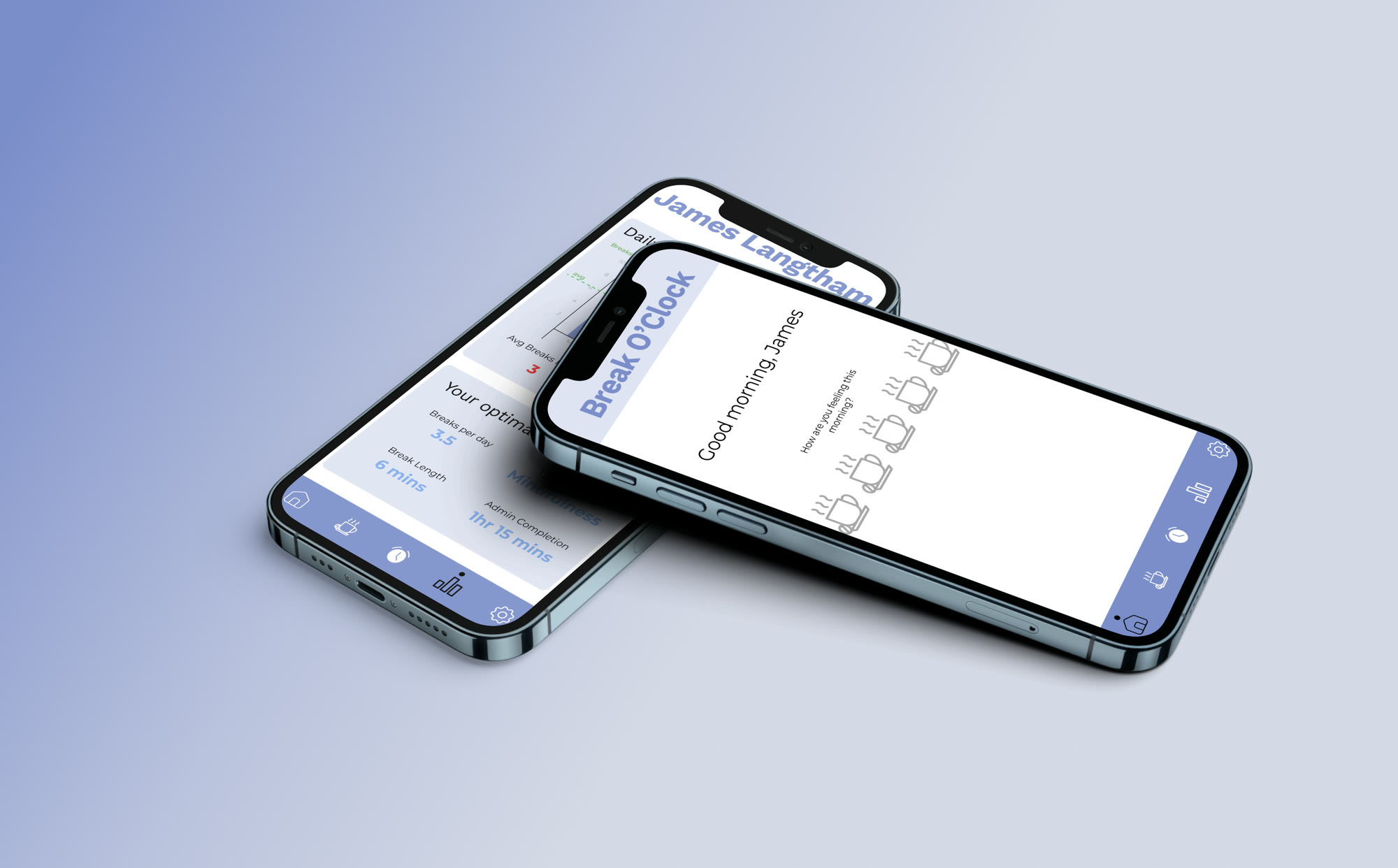
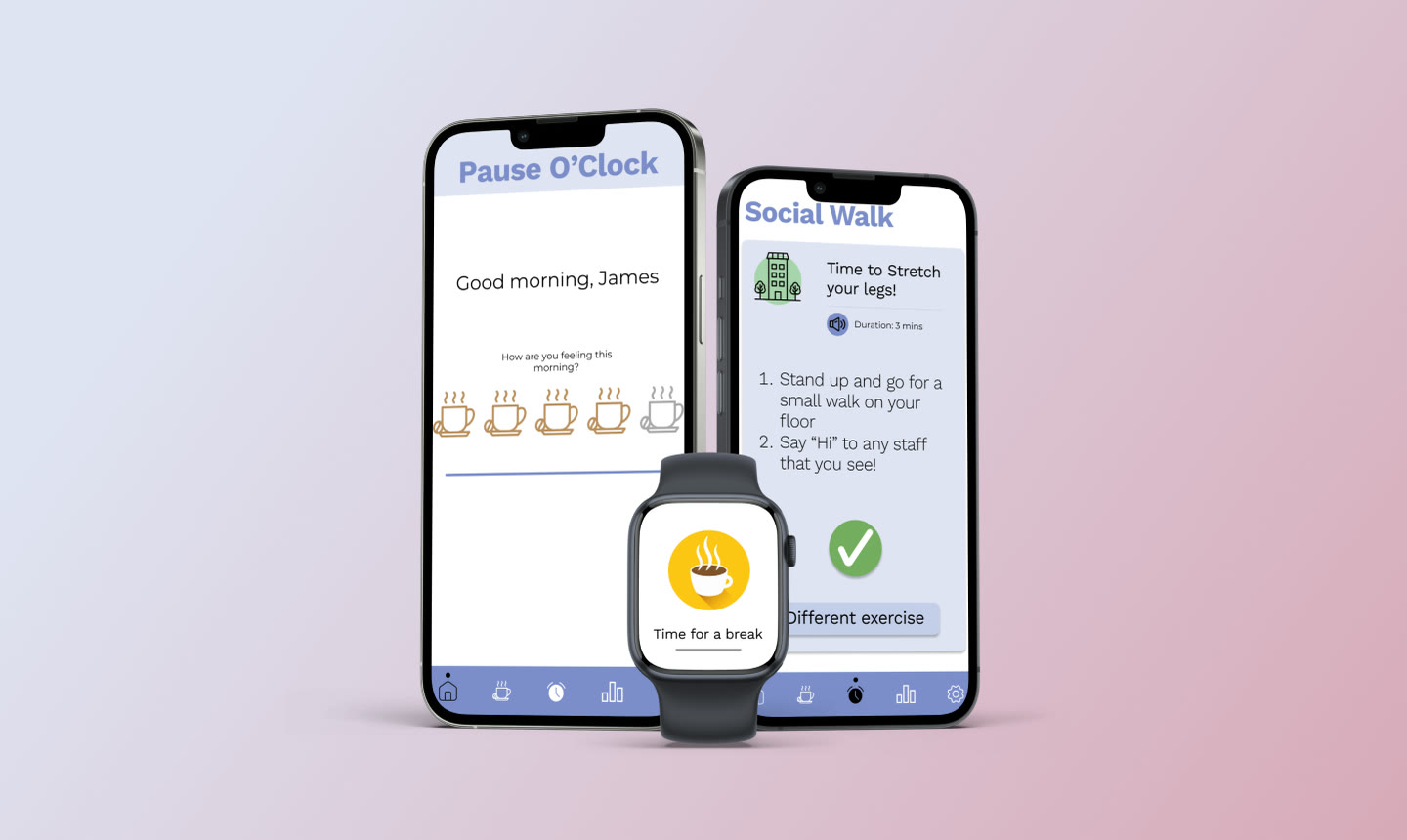
A wearable-and-app system that fits naturally into the consultation rhythm. Prompts activate at the transition between sessions - quiet enough to ignore mid-consult, salient enough to act on when it counts.
Haptic & Visual Cues
Subtle wearable vibrations paired with an on-screen visual prompt, timed to each consultation's end. Gentle enough to ignore mid-session, salient at every natural breakpoint.
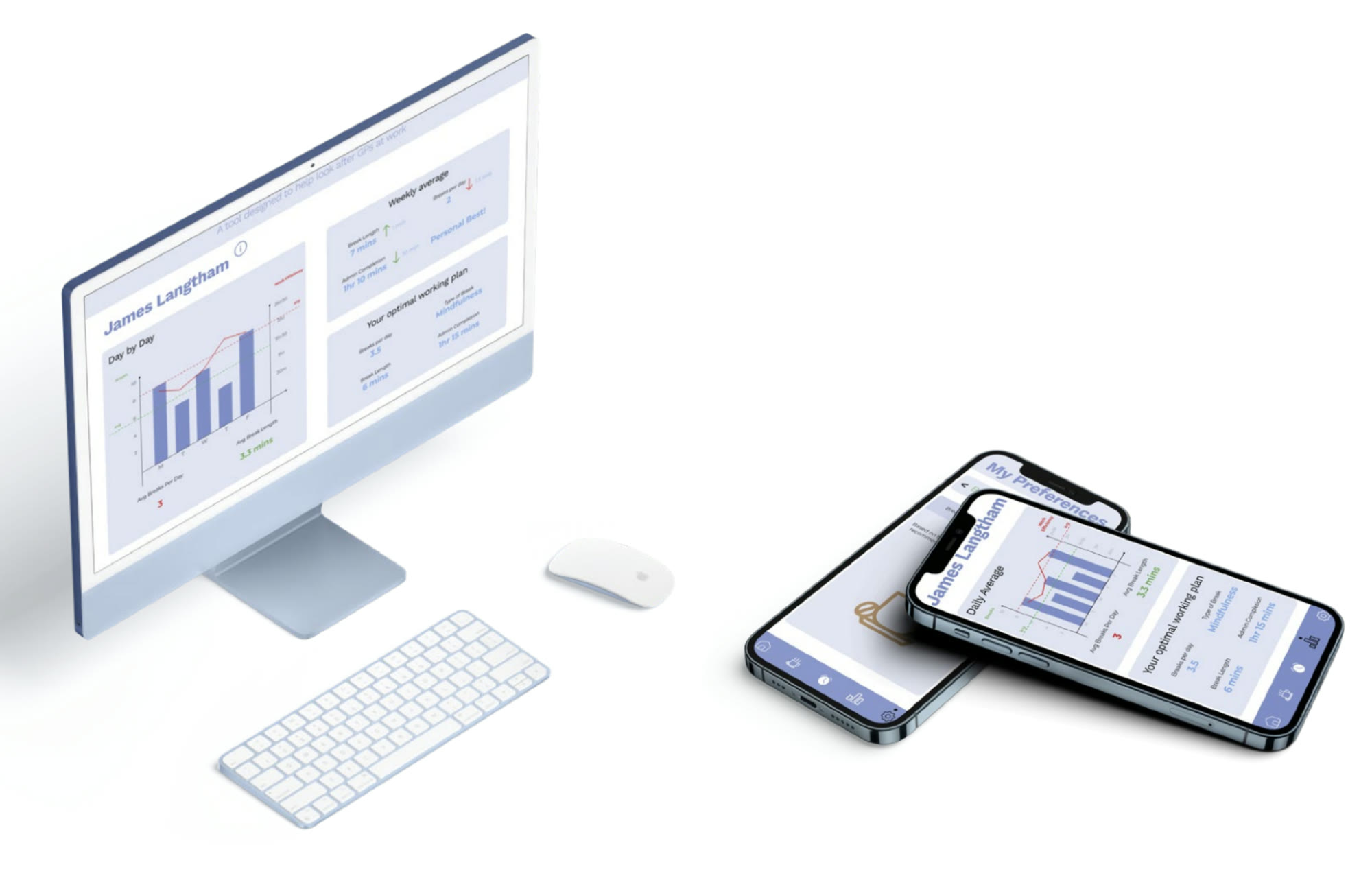
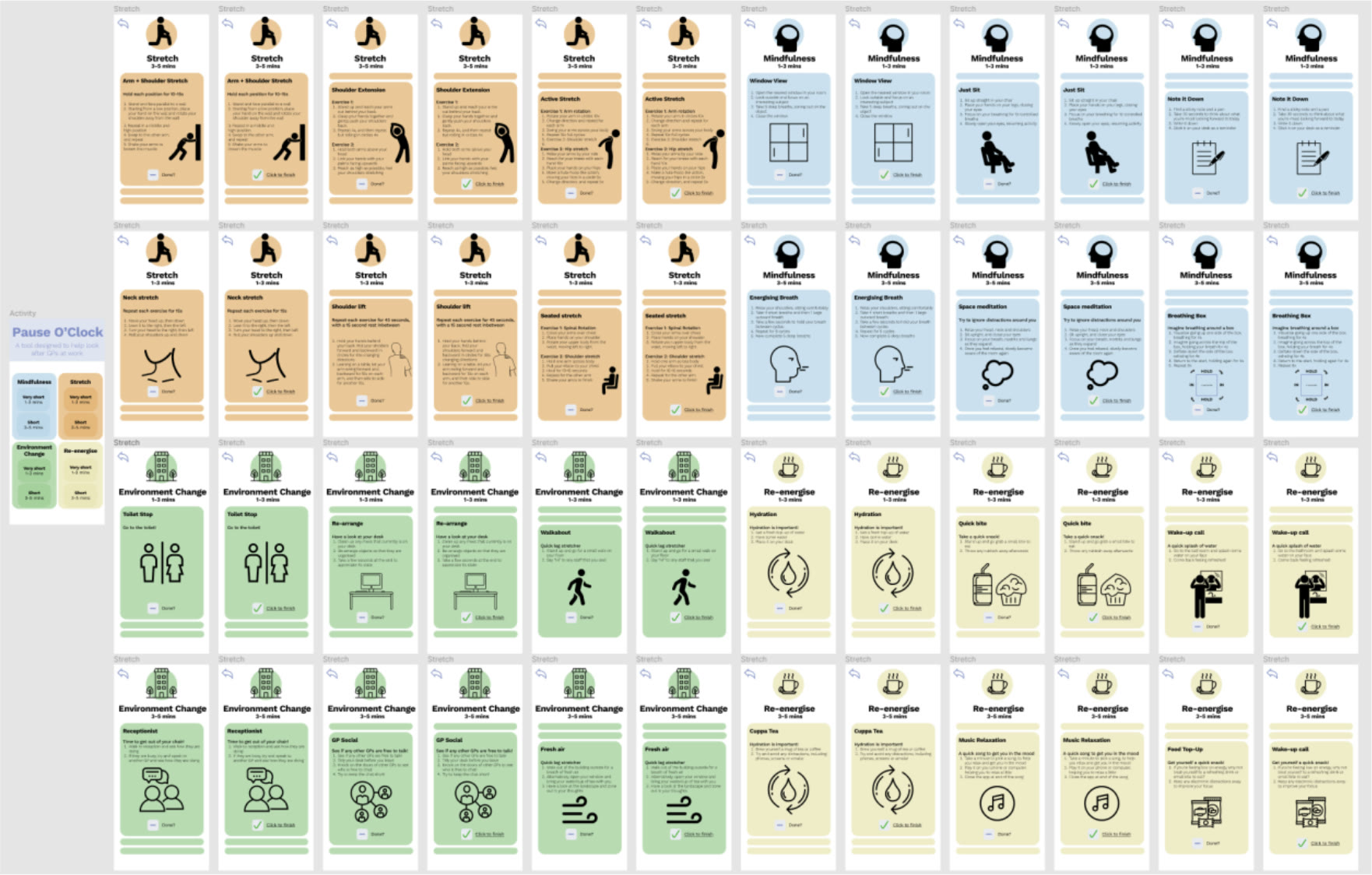
Mindfulness Activity Menu
A curated set of micro-activities - breathing, stretching, grounding - each completable in under 5 minutes without leaving the practice.
Passive Awareness Mode
For GPs who skip a break, the system quietly logs sedentary time and resurfaces a gentle nudge later - fostering awareness without imposing structure.
06Outcome
Validated in practice
Every GP who tested the prototype said they'd use it in practice. The results validated JITAI-based design in high-pressure clinical settings - and pointed clearly toward wider deployment.
100%
of GPs who used the intervention said they would use it in practice
91.7
perceived usability score when tested with 25+ medical professionals